Here’s How to Get the Look Right
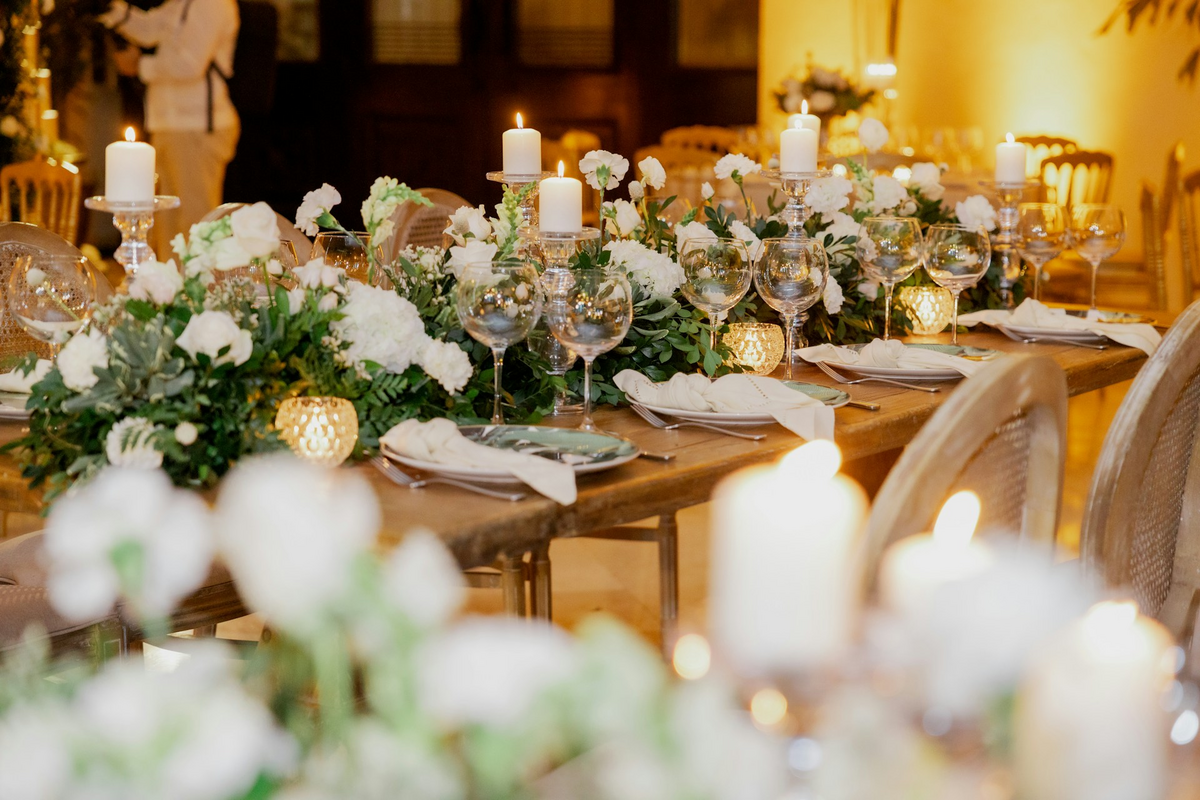
Candlelight has returned to wedding styling for a reason. It softens a room in a way that flowers alone cannot. Faces look warmer, glassware catches little glints, and even a large reception space can feel more intimate once the main lights drop.
Before ordering candles for wedding tables, start with the feeling you want after dinner. Candlelight changes during the day. It may look delicate at two o’clock, then become the strongest styling feature by the speeches. Good planning means thinking about both versions of the room.
The most beautiful candlelit weddings rarely feel heavily styled. They have rhythm, proportion, and restraint. Candlelight should not fight the flowers or crowd the meal. It should pull the room together and make everyone look their best.
Let the Venue Lead the Look
Every venue has its own relationship with candlelight. A stone barn can take generous pools of glow because the walls absorb warmth beautifully. A bright marquee needs more thought because clear sides and pale linings can make small flames look lost until later in the evening.
Ask the venue how the room changes after dusk. Photographs from past weddings are useful, yet a visit at a similar hour is better. You will see where darker corners appear and where table lighting needs support. If the reception runs late into the evening, those details become part of the guest experience.
Buying wholesale candles can make sense when the design needs volume. Still, quantity should follow the room plan. Ordering by instinct often leads to waste or a cluttered table. Work from the layout first, then calculate the real number needed for guest tables and feature areas.
Mix Height With a Light Hand
Height gives candle styling elegance, but too much height can block conversation. Guests should be able to speak across the table without leaning around a candlestick. During the wedding breakfast, comfort matters as much as atmosphere.
Tall tapered candles look graceful on long tables when they repeat with breathing space. Pillar candles bring a softer, fuller glow when placed lower. Floating candles can work well near reflective surfaces, especially when the venue allows water-filled vessels and safe placement.
The trick is to avoid making every candle do the same job. A reception room feels more considered when the eye moves gently between higher and lower points. Keep the tallest pieces away from tight table settings. Use lower light where food, wine, and service need room.
Give the Table Room to Work
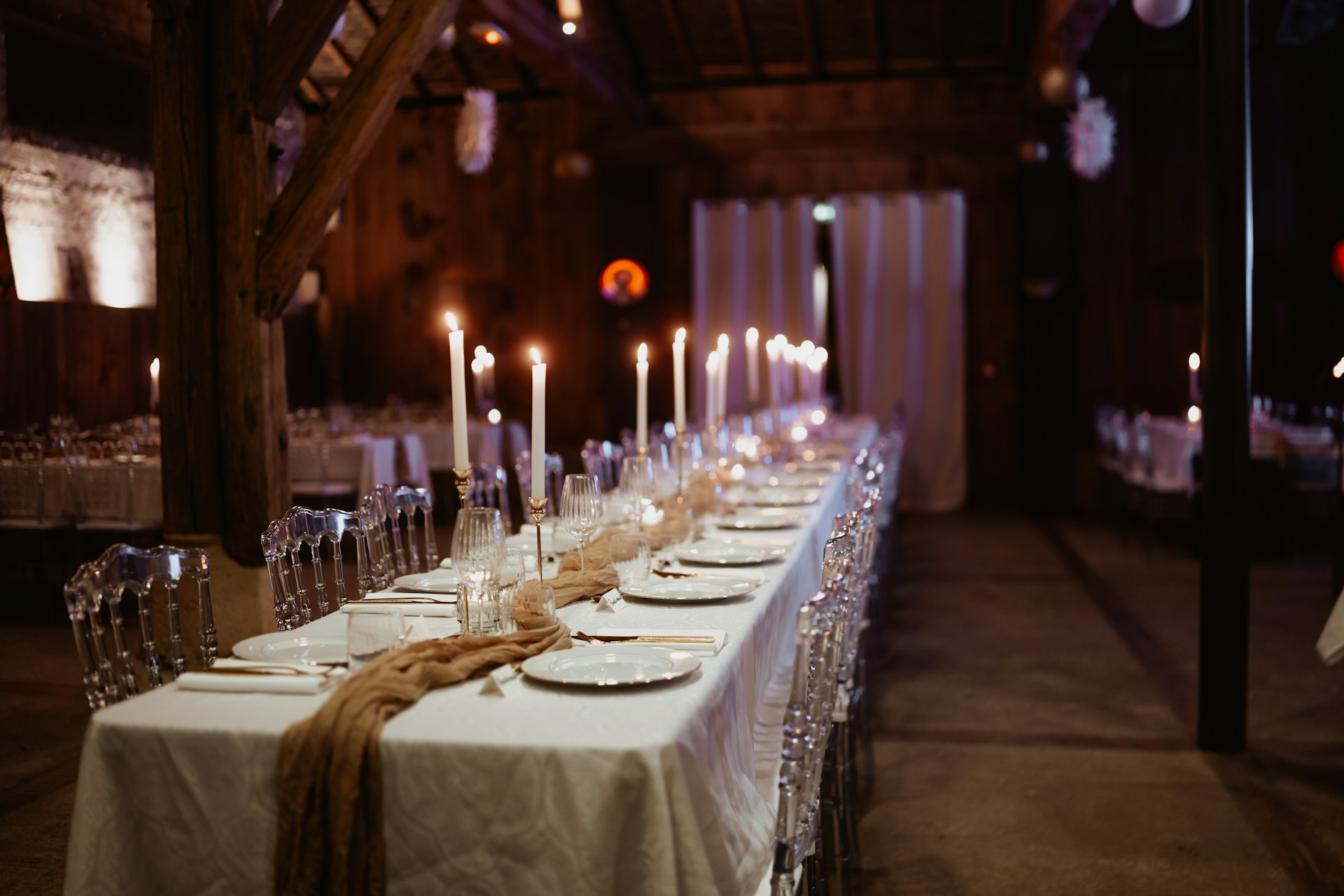
A candlelit table still needs to function. Guests need space to eat comfortably. Waiting staff need space to serve without knocking holders or reaching across flames. Table styling starts to fail when beauty makes the meal awkward.
Measure more than the table length. Width is often the problem. Many trestle tables look generous when empty, then become narrow after place settings are added. Before confirming the candle order, mock up one table at home or ask your stylist to test the design at the venue.
Flame position needs thought around menus and stationery. Paper should never come into contact with heat. Draped fabric also needs proper clearance. A table can still look romantic without pushing every detail into the centre. Often, the loveliest effect comes from fewer pieces placed with confidence.
Check the Flame Rules Early
Venue rules can change the whole candle plan. Some places allow real flame only inside glass. Others require LED candles because of insurance or building restrictions. Historic rooms can have stricter conditions, especially near old timber or delicate surfaces.
Get the rule in writing before placing large orders. A verbal answer during a viewing is not enough. Ask what holder style is allowed, how enclosed the flame must be, and who is responsible for lighting candles on the day. These questions sound practical because they are practical.
LED candles are not a poor substitute when chosen well. Cheap versions can look flat, but high-quality flameless candles are far more convincing than they used to be. They are especially useful where a candle must remain lit for many hours or where staff cannot safely manage a real flame.
Choose Colour for the Room, Not Just the Palette
Coloured candles can look exquisite, but they need to fit the room. A shade that looks charming on a mood board may feel too strong under warm lighting. Before committing, order a small sample and view it beside the linen at the right time of day.
Ivory is usually kinder than pure white. It photographs softly and works with most floral schemes. Deeper candle colours can add a beautiful editorial feeling, particularly in autumn and winter, yet the shade needs discipline. If the colour is bold, the rest of the table should give it space.
Metal holders also affect the mood. Brass feels warm. Silver feels cooler and sharper. Black can be elegant when the room has enough softness around it. The holder should support the candle, not steal attention from it.
Plan the Setup Properly
Candle styling is not finished when the boxes arrive. Someone has to unpack, place, light, monitor, and clear the candles. If no one owns that job, it can become a stressful detail on the wedding morning.
Assign responsibility before the final week. Your florist may style the tables, but the venue may control the flame. A planner may handle lighting, while a hire company may deliver holders only. Clear roles prevent last-minute confusion.
Timing also deserves care. Candles lit too early may burn down before the evening atmosphere begins. Candles lit too late may miss the entrance and first course. Speak to the venue about the best lighting moment, then write it into the day plan.
Candlelit weddings feel special because they change the mood without shouting. When the scale is right, the room feels warmer, and the photographs gain softness. When the safety and setup are planned early, nobody has to solve the look under pressure. The glow feels effortless because the practical work has already been done.
.jpg)

.jpg)
.jpg)