Mother of the Groom Outfits 2026: The Complete Style Guide
Here's something no one tells you about shopping for mother of the groom outfits: most women leave it far too late, then panic-buy something that doesn't quite feel right on the day.
The good news? 2026 has brought some genuinely beautiful options — and the trends this year are unusually flattering across a wide range of body types, ages, and venues.
Whether the wedding is a formal black-tie evening or a relaxed garden ceremony in July, this guide covers everything: colours, silhouettes, fabrics, accessories, and where to find the best outfits in the UK.
What's Trending for Mother of the Groom in 2026?
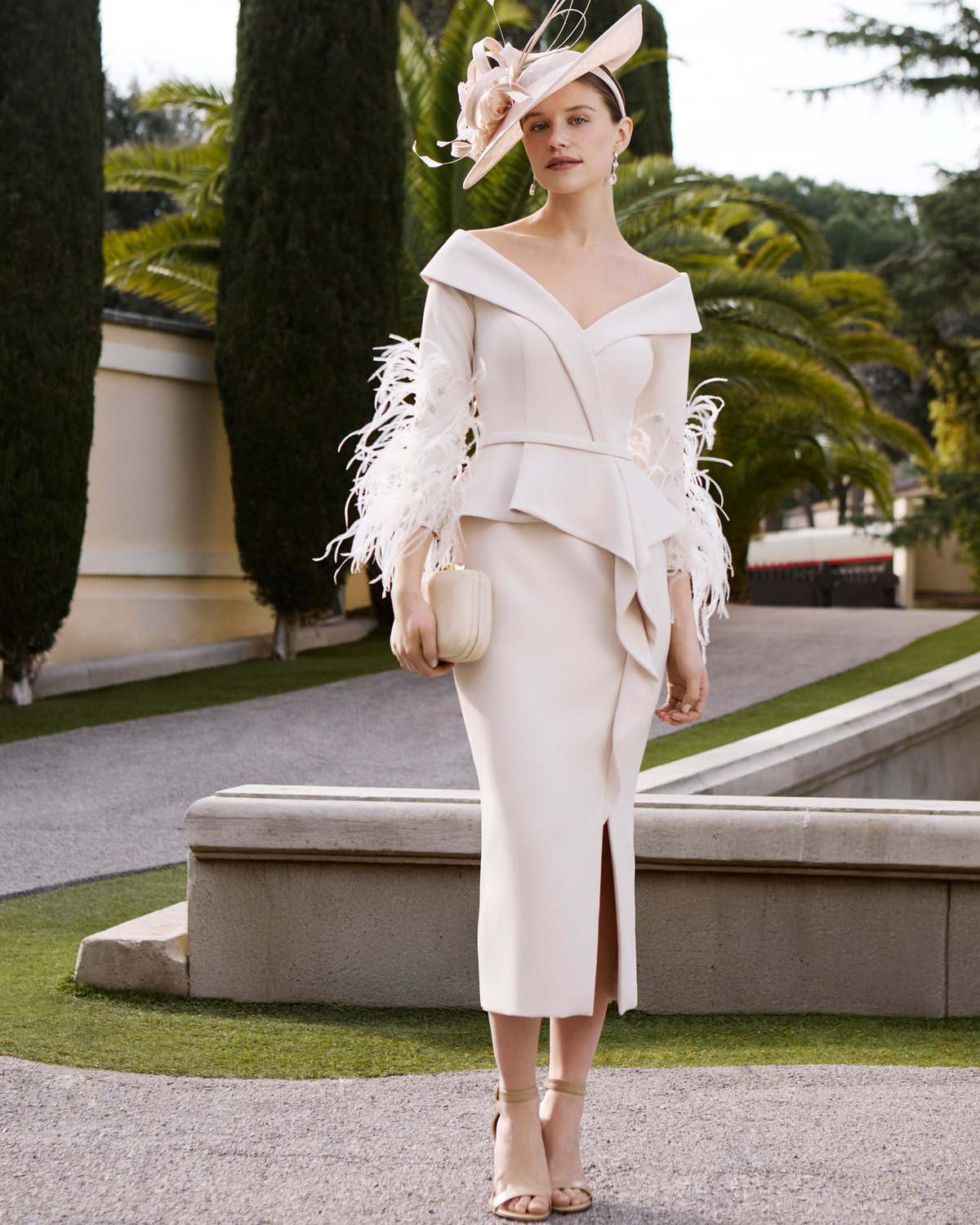
The big shift in 2026 is away from conservative, forgettable neutrals and toward what stylists are calling "modern elegance." Teri Jon, one of the most respected names in occasion wear, puts it plainly: "Today's mothers seek sophisticated, flattering gowns that feel current yet timeless."
That means soft neutrals — champagne, taupe, dove grey — still have a strong place, particularly for daytime or outdoor weddings. But jewel tones have moved firmly into the mainstream for evening events. Think emerald green, sapphire blue, deep plum. These shades photograph beautifully and project exactly the kind of confidence you want on the day.
What's largely disappeared is heavy embellishment. Beading and sequins from the mid-2010s have given way to subtle textures and clean drape, with fabrics like crepe, mikado, chiffon, organza, and soft satin doing most of the work. These materials move well, hold their shape across a long day, and rarely crease the way cheaper alternatives do.
Choosing the Right Silhouette
Silhouette does more heavy lifting than any other element of an outfit. Get it right and everything else — accessories, shoes, hair — falls into place. Get it wrong and no amount of styling will fully fix it.
The Most Flattering Cuts This Year
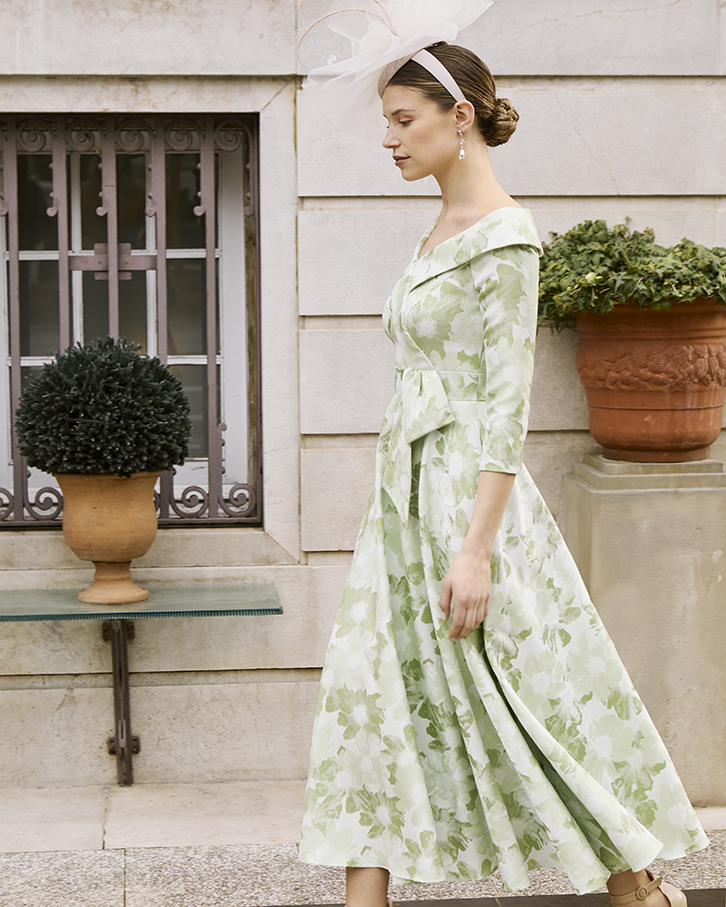
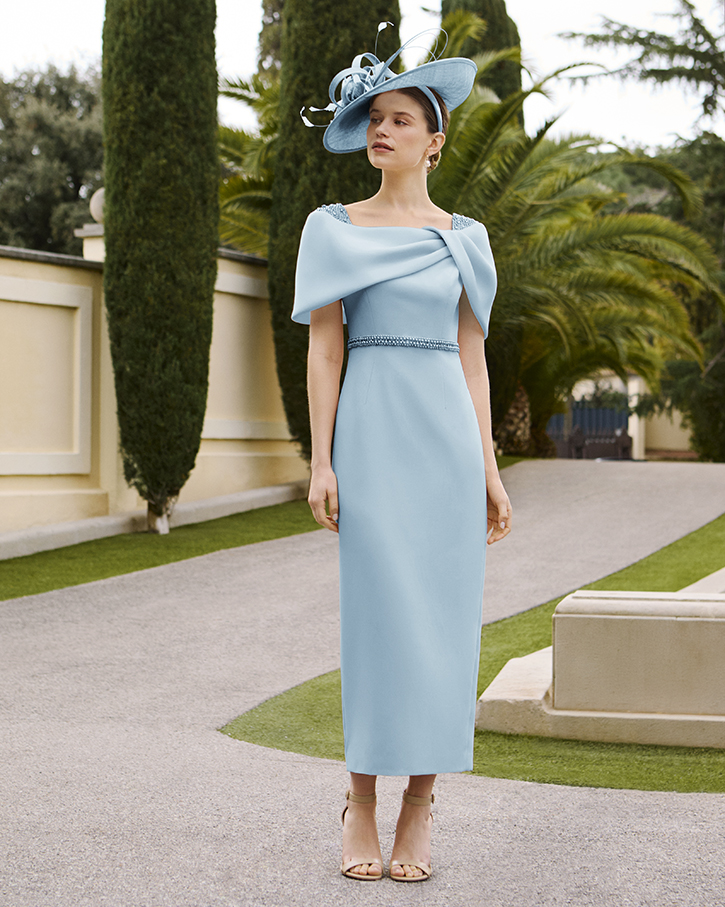
A-line and fit-and-flare styles remain the most universally flattering options. They define the waist, skim the hips, and work across a huge range of body shapes. Column dresses have surged in popularity for evening events — a sleek, floor-length column in a rich jewel tone with a simple cape is arguably the most elegant look available right now.
One-shoulder styles are trending strongly, particularly in the UK market, alongside asymmetrical and halter necklines. Portrait necklines — those soft, wide cuts that sit off the collarbone — are a particularly good choice for women who want coverage without looking overdressed.
Length: The Practical Decision
Midi length is the safest and most versatile choice for most venues. It suits a church ceremony as readily as a hotel reception, photographs well at any angle, and is genuinely comfortable to wear for six or seven hours.
Floor-length gowns belong at black-tie events and formal evening receptions. Tea-length and high-low hems work well for daytime and outdoor weddings. The one length to avoid at almost any wedding is anything above the knee — not because of outdated rules, but because it rarely photographs as elegantly in a formal context.
Dressing for the Venue and Season
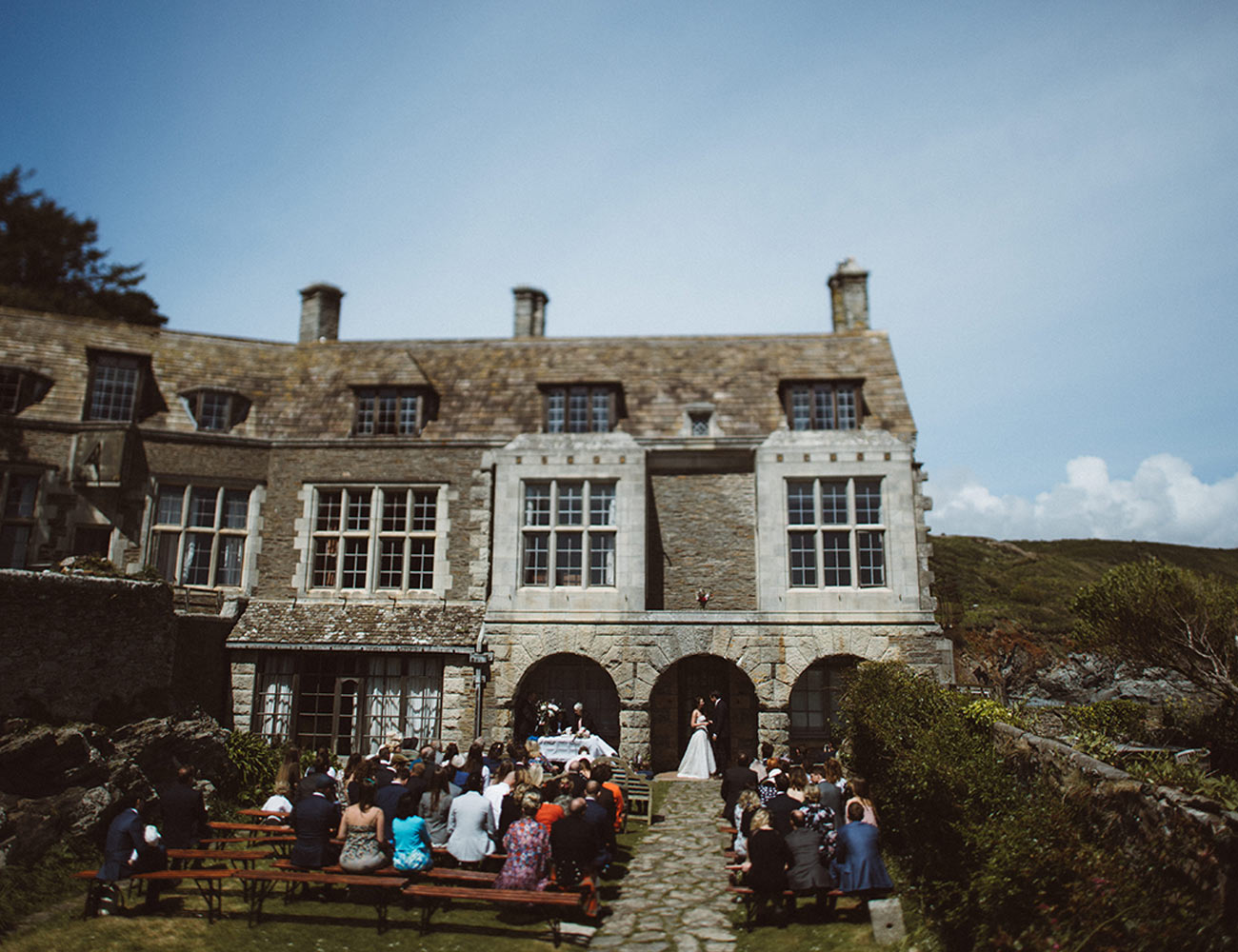
Venue matters more than most style guides admit. A chiffon midi that looks perfect at a garden wedding in June will look hopelessly underdressed at a winter castle reception in December.
For garden and outdoor summer weddings, lightweight fabrics are essential. Chiffon and organza in soft neutrals or pastels, paired with wedge heels or block heels (far more practical on grass than stilettos), work beautifully. A shawl in a matching or complementary fabric adds polish and solves the temperature problem as the evening cools.
For formal indoor evening events, satin columns, structured mikado gowns, and velvet pieces all work well. Velvet in deep plum or navy is particularly strong for winter receptions. A cape or evening jacket adds versatility — you can remove it for dancing and put it back on later.
Beach and destination weddings call for the lightest possible fabrics in neutral or warm tones. Flat or low-heeled sandals are genuinely the only practical option on sand or cobblestones.
Pantsuits and Non-Dress Alternatives
Pantsuits have had a significant moment in occasion wear and show no signs of slowing down. Wide-leg trouser suits in chiffon or crepe, three-piece sets, and tailored jumpsuit options offer genuine versatility — they're comfortable across a full wedding day, work at almost any formality level, and give a polished, modern look that a dress doesn't always achieve.
The Lauren Ralph Lauren wide-leg jumpsuit has become something of a reference point for this style. Paired with a statement heel and simple jewellery, it reads as effortlessly chic rather than casual.
For women who've ruled out dresses entirely, a trouser suit in a jewel tone or soft neutral — with a chiffon overlay jacket — is worth serious consideration. Mother of the groom outfits at Frox of Falkirk include a wide selection of trouser suits and fuller-figured styles, with over 2,000 pieces across sizes 6 to 36 — including specialist plus-size designers like Ann Balon and Kirsten Krog up to size 36.
Accessories: Less Is Almost Always More
The default instinct at a wedding is to add more. More jewellery, a more elaborate bag, a more dramatic fascinator. The instinct to resist is usually the right one.
Pearl earrings or simple studs, a clutch bag with a chain strap for hands-free movement at the reception, and either nude or metallic shoes — these three elements work with almost any outfit and never risk upstaging the couple.
In the UK, particularly at Scottish daytime weddings, a fascinator or small hat is entirely appropriate and adds a sense of occasion that you won't get from a bare head. Matching the fabric or tone of the hat to the outfit, rather than creating a contrast, is the cleaner choice.
Makeup and hair should complement rather than compete. Soft neutrals, an updo or loose waves, and a well-defined lip are a reliable formula. The goal is to look polished in photographs taken across twelve hours — which generally means avoiding anything too trend-specific or high-maintenance.
Body Type and What Actually Works
Generic advice about body types can feel frustrating, but some principles genuinely hold across most situations.
A-line and empire waist silhouettes flatter hourglass and apple shapes. Wrap styles and ruching work well for pear-shaped figures. Plus-size options with ruching and peplum detailing create shape and definition without restricting movement. Petite frames benefit from tea-length hemlines rather than full-length gowns, which can overwhelm a shorter silhouette. Taller women can carry wide-leg trouser suits and column gowns particularly well.
For more mature figures, a structured midi in a quality fabric reads as sophisticated rather than conservative — especially in a confident colour. Avoid very fitted styles if comfort is a priority across a long day.
Budget and Where to Shop in the UK
Budget broadly breaks into three tiers. High street and rental options — ASOS, Monsoon, or rental platforms like Hurr — sit under £200 and are reasonable for a one-off occasion.
The mid-range (£200–£500) covers Azazie, David's Bridal, and Fenwick, where quality improves noticeably. At this price point, fabrics drape better, construction is more reliable, and alterations are usually worthwhile.
For a premium experience with genuine expert styling, Frox of Falkirk in Falkirk — 30 minutes from both Glasgow and Edinburgh — is Scotland's leading boutique for occasion wear. With over 2,000 designer pieces from names like Fely Campo, Luis Civit, Rosa Clara, and Teresa Ripoll, personal styling appointments are available Monday to Saturday (and Sundays 11am–4pm). The range of sizes and the no-pressure service make it worth the trip, even from further afield.
A Few Things Worth Remembering
Coordinate with the mother of the bride rather than matching — the goal is a complementary palette, not identical dresses. Avoid white, ivory, and anything that reads bridal. Black is absolutely fine for evening events in 2026, despite older conventions suggesting otherwise.
Start shopping earlier than feels necessary. Popular styles and sizes sell out in spring before summer wedding season, and alterations take time. Booking a styling appointment three to four months before the wedding date is sensible rather than excessive.
The most important thing? Wear something that feels like you — not a costume for someone else's idea of what a mother of the groom should look like. The best outfit is the one worn with genuine confidence.
.jpg)
.jpg)
.jpg)